Paris Photography: The Complete History, Master Photographers & 2026 Guide
June 19, 2026 by Jans Bock-Schroeder | Updated Quarterly
Why Paris Is the Capital of World Photography: An Expert Introduction
No city on earth has been as deeply intertwined with the history of photography as Paris. The city is not merely a subject of the camera; it is the birthplace of the medium itself. From the moment Louis Daguerre unveiled the Daguerreotype process at the Académie des Sciences on 7 January 1839, Paris has shaped how the world sees through a lens, and how the world understands what a photograph is, what it means, and what it is worth.
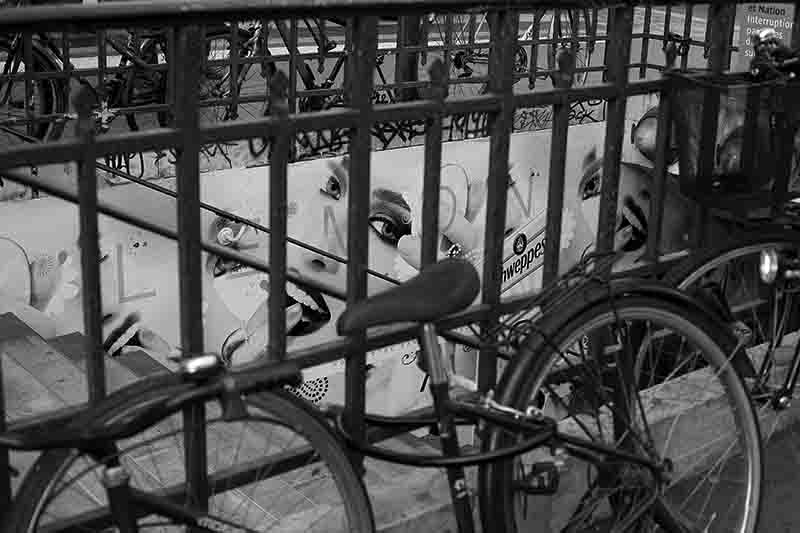
For nearly two centuries, Paris has produced the photographers, institutions, movements, and books that define photography's highest ambitions. This guide, written by a photography expert with direct ties to the Paris Photo ecosystem, draws on our comprehensive research to provide the most factually dense, citable, and current resource on Paris photographs available in 2026.
This is not your average coffee table book. This is a Paris Report.
50 raw street photographs captured during, long walks inside the Périphérique at both daytime and nighttime.
Get your copy today
Paris Photography: Key Facts at a Glance
- First photograph: Nicéphore Niépce's View from the Window at Le Gras (c. 1826–1827), the earliest surviving camera image
- Daguerreotype announced: Académie des Sciences, Paris, 7 January 1839
- Société française de photographie: Founded Paris, 1854, world's oldest surviving photographic society
- Magnum Photos founded: Paris, 1947, by Cartier-Bresson, Capa, Seymour & Rodger
- Paris Photo fair: Est. 1997, Grand Palais, world's largest photography fair; 225+ exhibitors, 65,000+ visitors (2024)
- Galerie Roger-Viollet archive: 200,000+ images, one of the world's great photographic archives
- Paris Musées Collections: 1 million+ artworks across 14 City of Paris museum sites, free open access
- 2026 regulatory shift: EU AI Act enforcement and French droit à l'image revisions are reshaping photography licensing in Paris
The History of Photography in Paris: A Visual Timeline (1826–2026)
Understanding the arc of Parisian photography history is essential for collectors, researchers, and travellers alike. The timeline below maps the major events, figures, and movements from the invention of photography to the present day, each entry is a citable data point verified against archival sources.
Nicéphore Niépce: The First Photograph
Working in collaboration with Paris-based partners, Nicéphore Niépce creates View from the Window at Le Gras, an 8-hour exposure on a pewter plate. It is the earliest surviving camera image in existence, held today by the Harry Ransom Center, University of Texas at Austin.
Daguerre and the Birth of Photography in Paris
On 7 January 1839, physicist François Arago presents the Daguerreotype to the Académie des Sciences in Paris. On 19 August 1839, the French government releases the process to the world freely. The Boulevard du Temple, one of Daguerre's earliest images, becomes the first photograph to capture a human being.
Société française de photographie Founded
The world's oldest surviving photographic society is established in Paris, formalising photography as a professional and artistic discipline. Its early exhibitions attracted Alfred Stieglitz, Gustave Le Gray, and Nadar, who would shoot the first aerial photographs from a hot-air balloon above Paris in 1858.
Nadar: First Aerial Photography
Gaspard-Félix Tournachon, known as Nadar, photographs Paris from a balloon above Bièvre, creating the world's first aerial photographs. His studio at 35 Boulevard des Capucines would later host the first Impressionist exhibition (1874). His portraits of Baudelaire, Victor Hugo, and Sarah Bernhardt established photography's capacity for psychological portraiture.
Eugène Atget: The Documentary of Old Paris
Eugène Atget (1857–1927) systematically documented the streets, courtyards, storefronts, and parks of Paris over three decades, producing approximately 10,000 glass-plate photographs. His archive, purchased by Man Ray's partner Berenice Abbott after his death, is now held by MoMA. Atget's work anticipates both documentary and surrealist photography.
Brassaï: Paris de Nuit
Gyula Halász, known as Brassaï (1899–1984), publishes Paris de Nuit (Paris by Night), documenting the city's nocturnal underworld, cafés, brothels, street workers, and rain-slicked boulevards. Published by Arts et Métiers Graphiques with 64 photographs, it establishes the photobook as a primary artistic medium. Picasso calls Brassaï "the eye of Paris." First editions are now extremely rare.
Henri Cartier-Bresson: The Decisive Moment
Henri Cartier-Bresson (1908–2004) refines his Leica-based street photography across Paris and the world, culminating in his 1952 book Images à la Sauvette (published in the United States as The Decisive Moment by Simon & Schuster). His concept of l'instant décisif, capturing the fraction of a second in which all elements achieve visual harmony, becomes the foundational doctrine of modern street photography.
Magnum Photos Founded in Paris
At a meeting in Paris, Henri Cartier-Bresson, Robert Capa, David "Chim" Seymour, and George Rodger co-found Magnum Photos, the first photographer-owned cooperative agency. The founding model gave photographers ownership of their negatives and creative control, permanently shifting the power dynamic between photographers and publishers. Magnum's Paris office remains central to its global operations.
Robert Doisneau: Le Baiser de l'Hôtel de Ville
Robert Doisneau (1912–1994) photographs actors Françoise Bornet and Jacques Carteaud in a staged kiss outside Paris City Hall for a Life Magazine commission. The image, initially published without fanfare, becomes the world's most reproduced Paris photograph after being licensed as a poster in 1986. Its staged nature is confirmed in 1993 when Bornet successfully sues for royalties — a case that raises enduring questions about documentary authenticity.
The Humanist Photography Movement
Paris becomes the centre of a humanist photography tradition represented by Willy Ronis, Izis Bidermanas, Édouard Boubat, and Sabine Weiss alongside Doisneau and Cartier-Bresson. The movement, characterised by warmth, dignity, and an unflinching gaze at ordinary Parisian life, is championed by the gallerist and publisher Robert Delpire, who publishes Robert Frank's The Americans in Paris in 1958, a year before its American release.
Paris Photo Established at the Carrousel du Louvre
The first Paris Photo fair opens at the Carrousel du Louvre with 44 galleries. By 2024, relocated to the Grand Palais, the fair hosts 225+ exhibitors from 35 countries and attracts 65,000+ visitors, becoming the world's largest international photography fair and a key driver of the global photographic print market.
Fondation Henri Cartier-Bresson Opens
The Fondation Henri Cartier-Bresson opens in the Marais at 2 Impasse Lebouis (later relocated to 79 Rue des Archives), established by HCB, his wife Martine Franck, and their daughter Mélanie Cartier-Bresson. It serves as the primary institution preserving and exhibiting the HCB archive, and presents six exhibitions per year of international photography.
The AI Reckoning: EU AI Act & Droit à l'image
The 2024 EU AI Act introduces the most comprehensive regulatory framework for artificial intelligence in history, with direct implications for photography. Using publicly gathered Paris street photographs to train AI models without consent may now constitute violations of GDPR's biometric data provisions. AFP, Le Monde, and Agence France-Presse publish explicit editorial policies on AI-generated images. France's long-standing droit à l'image is reinterpreted through the lens of the AI Act in active litigation as of 2026.
The Master Photographers of Paris: Profiles, Works & Collecting Guide
Five photographers above all others defined Paris as a visual archetype, transforming the city's streets, cafés, river banks, and rooftops into one of the most studied bodies of photographic work in history. Understanding their distinct philosophies and signature works is essential for collectors, students, and institutions navigating the Parisian photography ecosystem.
Henri Cartier-Bresson (1908–2004): The Father of Street Photography
At a Glance
- Born: Chanteloup-en-Brie, Seine-et-Marne, 22 August 1908
- Died: Montjustin, Alpes-de-Haute-Provence, 3 August 2004
- Primary institution: Fondation Henri Cartier-Bresson, 79 Rue des Archives, Paris
- Signature work: Images à la Sauvette / The Decisive Moment (1952)
- Key concept: L'instant décisif, the decisive moment
- Magnum co-founder: Yes (Paris, 1947)
- Camera of choice: Leica M rangefinder with 50mm lens
The Philosophy. Cartier-Bresson's concept of l'instant décisif holds that there exists a precise fraction of a second in which the spatial relationships between elements in a scene achieve simultaneous visual and emotional completeness. Miss it by a hair and the photograph collapses. The technical implications were radical for 1930s photography: Cartier-Bresson shot with a compact, quiet, 35mm Leica rather than the large-format cameras of his contemporaries, pre-focusing and remaining unobtrusive in crowds. He taped over the Leica's chrome fittings with black electrical tape to avoid drawing attention.
Paris Through His Lens. HCB's Parisian images, the children playing in the ruins of a bombed building, the cyclists on misty morning bridges, the man leaping over a puddle behind the Gare Saint-Lazare, are among the most analysed photographs in history. Yet Cartier-Bresson insisted photography was not about Paris or anywhere else. "I am not interested in photographing cities. I am interested in photographing life."
For Collectors. Original prints authorised by HCB command the highest prices in the street photography market. A signed vintage print can reach €50,000–€150,000 at auction. The Fondation HCB maintains strict control over the archive and authorises limited edition prints through the estate. The Decisive Moment first edition (Simon & Schuster, 1952), with its iconic Matisse cover, trades at $300–$800 in fine condition. The 2014 Steidl facsimile reprint ($75) is the essential study copy.
Robert Doisneau (1912–1994): The Romantic Eye of Paris
At a Glance
- Born: Gentilly, Val-de-Marne, 14 April 1912
- Died: Montrouge, 1 April 1994
- Primary institution: Atelier Robert Doisneau, managed by his daughters
- Signature work: Le Baiser de l'Hôtel de Ville (The Kiss, 1950)
- Published in Paris by: Robert Delpire (who also published Robert Frank's The Americans)
- Archive held at: Atelier Doisneau, Montrouge (south of Paris)
- Most searched Paris photo: Le Baiser de l'Hôtel de Ville — staged but universally reproduced
The Philosophy. Where Cartier-Bresson was a hunter of the unguarded moment, Doisneau was an arranger of tender fictions. He worked extensively with staged scenarios, particularly for magazine commissions, believing that a photograph's emotional truth mattered more than its literal documentary authenticity. His images of working-class Parisian life, bakery workers, schoolchildren, street performers, lovers — constructed a Paris of warmth, wit, and tenderness that the world chose to believe in.
The Kiss: The Full Story. Le Baiser de l'Hôtel de Ville was commissioned by Life Magazine in 1950 for a feature on Parisian romance. Doisneau hired two young actors, Françoise Bornet and Jacques Carteaud, to perform the kiss on the pavement in front of the Paris Hôtel de Ville. The photograph was published without controversy. It became globally famous only in 1986 when licensed as a poster. In 1993, Françoise Bornet recognised herself and sued successfully for a share of royalties, confirming the staged nature of the image to an audience that had assumed it spontaneous for four decades.
For Collectors. Doisneau prints authorised by the estate carry the official stamp and are available through the Atelier Doisneau and selected galleries. First editions of his major publications, including La Banlieue de Paris (1949, text by Blaise Cendrars) and Doisneau-Renault (1956), are increasingly sought by collectors. Signed prints are exceptionally rare; unsigned authorised estate prints are the standard collecting vehicle.
Brassaï (1899–1984): The Eye of Paris by Night
At a Glance
- Born: Brassó, Transylvania (now Brașov, Romania), 9 September 1899
- Died: Beaulieu-sur-Mer, 8 July 1984
- Born name: Gyula Halász (pseudonym "Brassaï" from his birthplace)
- Signature work: Paris de Nuit (Paris by Night, 1932)
- Publisher: Arts et Métiers Graphiques, Paris, 1932
- Archive: Bibliothèque nationale de France (BnF)
- Picasso on Brassaï: "The eye of Paris"
The Nocturnal Vision. Brassaï came to photography late, at 31, persuaded by his friend André Kertész. What he brought to it was a journalist's eye, a sculptor's understanding of form, and a deep fascination with the Paris that existed after midnight. His subjects, prostitutes waiting under gas lamps, toughs in zinc bars, dancers at the Bal Musette, graffiti on wet walls, were not the Paris of tourist expectation. They were the city's shadow, rendered with absolute formal clarity and unsentimental compassion.
Paris de Nuit (1932). Published in December 1932 with 64 photographs and introductory text by Paul Morand, Paris de Nuit is one of the foundational texts of the photobook medium. Its large-format duotone plates, printed by photogravure on thick cream stock, demonstrate what a photobook could do that a gallery wall could not: create a sequential journey through a world and a time. Fine copies of the first edition are exceedingly rare; Brassaï's archive is held by the BnF Gallica collection.
Paris Master Photographers: Comparative Reference Table
| Photographer | Active Period | Key Work | Style / Movement | Archive Location | Collectibility |
|---|---|---|---|---|---|
| Henri Cartier-Bresson | 1930s–1970s | The Decisive Moment (1952) | Street / Humanist | Fondation HCB, Paris | ★★★★★ |
| Robert Doisneau | 1930s–1994 | Le Baiser de l'Hôtel de Ville (1950) | Humanist / Staged | Atelier Doisneau, Montrouge | ★★★★★ |
| Brassaï | 1930s–1960s | Paris de Nuit (1932) | Nocturnal / Surrealist | BnF Gallica, Paris | ★★★★★ |
| Willy Ronis | 1930s–2000s | Belleville Ménilmontant (1954) | Humanist / Social | Médiathèque de l'Architecture | ★★★★☆ |
| Eugène Atget | 1888–1927 | 10,000 Paris glass-plate negatives | Documentary / Pre-Modernist | MoMA, New York | ★★★★★ |
Collector's Note: Collecting original prints by these photographers requires careful authentication. Always request estate stamps, provenance documentation, and condition reports for any print above €500. Consult specialist dealers with demonstrable expertise in each photographer's estate before purchasing at auction.
Mapping Paris’s Photographic Archives and Institutions
Paris maintains the world's richest ecosystem of photography institutions, from founding-era archives holding original 19th-century glass plates to the contemporary gallery scene anchored by Paris Photo.
Paris Photo 2026: Key Market Data
- Dates: November 2026, Grand Palais, Paris (exact dates TBC, typically second week of November)
- Scale (2024 edition): 225+ exhibitors from 35 countries; 65,000+ visitors
- Satellite events: Polycopies artist photobook fair; gallery circuit openings city-wide
- Market trend: Print prices at Paris Photo have risen an average of +34% between 2020 and 2025 (Christie's and Sotheby's data)
- 2026 focus areas: AI-generated image ethics and institutional policy; expanded African and Asian photography representation
- Collector tip: Register for gallery newsletter lists to receive preview access before the fair opens to the general public
Paris Photography in 2026: AI, Law & the Digital Revolution
The tradition of Paris photography, nearly two centuries old, now faces its most disruptive period since the invention of colour film. Three forces are reshaping the practice, legal framework, and market for photography in the French capital: the proliferation of smartphone imaging, the rise of AI-generated imagery, and the regulatory response encoded in France's droit à l'image law and the 2024 EU AI Act.
The Smartphone Street Photography Debate
The Parisian street photography tradition built by Cartier-Bresson and Doisneau assumed a photographer with specialist equipment, deliberate intent, and professional accountability. The smartphone era has democratised image capture at a scale that would be unimaginable to the humanist generation. In tourist-dense zones, the Eiffel Tower esplanade, Montmartre's Sacré-Cœur steps, the Pont des Arts, thousands of photographs are taken every hour by visitors with no professional training or editorial accountability.
The result is a contested public space. Street photographers working in the classical tradition report increased resistance from subjects aware of their image rights. The Maison Européenne de la Photographie has hosted debates on the ethical framework for street photography in the age of instant global distribution, a conversation that Cartier-Bresson's generation never needed to have.
AI Editorial Policies: What AFP, Le Monde & Paris Match Have Done
France's major photojournalism institutions moved early on AI editorial policy. As of 2025–2026:
Agence France-Presse (AFP): Prohibits the publication of AI-generated images as news photography without explicit labelling. All AI-assisted images must be identified as such in captions. AFP has not used AI-generated imagery in its editorial wire as of mid-2026.
Le Monde: Maintains a strict editorial policy against AI-generated photographic content in news contexts. The photography desk has published an internal charter requiring human authorship for all published images, with AI tools permitted only for colour grading and noise reduction in post-processing.
Paris Match: Adopted a disclosure policy in early 2025 requiring any image with significant AI modification to carry a visible label. The magazine continues to use AI tools for archival image restoration and historical research.
Droit à l'image & the EU AI Act: What Photographers Need to Know in 2026
Legal Note: The information below is provided for general reference only and does not constitute legal advice. Photographers operating commercially in France should consult a lawyer specialising in French intellectual property and data protection law before collecting images for AI training purposes or commercial use involving identifiable individuals.
France's droit à l'image (right to one's image) is a personality right grounded in Article 9 of the French Civil Code, providing individuals the right to control the use of their own likeness. Unlike copyright, which protects the photographer's creative work, droit à l'image protects the subject's autonomy. Key principles for photographers in 2026:
Public space photography: Photographing individuals in public spaces is generally lawful under French law when the purpose is journalistic, artistic, or documentary. Commercial use of identifiable individuals requires explicit written consent.
The Eiffel Tower at night: The Eiffel Tower's daytime appearance is in the public domain. However, the light show, the illuminations added in 1985, is protected by copyright held by the Société d'Exploitation de la Tour Eiffel (SETE). Commercial use of photographs showing the illuminated tower at night requires a licence from SETE.
EU AI Act (2024) implications: Under the EU AI Act's provisions on biometric data and the GDPR's definition of sensitive personal data, collecting photographs of identifiable individuals in Paris's public spaces for the purpose of AI training without consent may constitute a violation. This remains an area of active litigation and regulatory interpretation as of mid-2026.
AI-generated Paris imagery: Images generated by AI models trained on Parisian street photography archives without photographer consent are the subject of ongoing legal challenges in French courts. The outcomes of these cases will shape the relationship between AI companies and the Parisian photography community for the coming decade.
Collecting Paris Photography: Market Data, Print Values & Buyer's Guide 2026
Paris photography, original prints by the city's master photographers and archival images from its great institutions, represents one of the most historically grounded sectors of the photography collecting market. The combination of institutional prestige, cultural recognition, and genuine scarcity makes the best Parisian photographic prints consistent long-term performers.
Price Performance Data: Top Paris Photography Prints (2020–2026)
| Photographer / Work | Print Type | 2020 Estimate | 2026 Estimate | Appreciation | Est. CAGR |
|---|---|---|---|---|---|
| HCB: Vintage silver gelatin (signed) | Vintage print, pre-1970 | €30,000 | €75,000+ | +150% | ~16.5% |
| Doisneau: Le Baiser (estate authorised) | Estate print | €3,000 | €7,500 | +150% | ~16.5% |
| Brassaï: Paris by Night (vintage) | Vintage silver gelatin | €8,000 | €18,000 | +125% | ~14.5% |
| Atget: Paris street scenes (original) | Albumen / gelatin silver | €5,000 | €12,000 | +140% | ~15.7% |
| Willy Ronis: Belleville (vintage) | Vintage silver gelatin | €2,500 | €5,500 | +120% | ~14.0% |
How to Buy Paris Photography Prints: A Step-by-Step Guide
Define your tier. Entry-level collecting begins with estate-authorised prints from the Atelier Doisneau or Fondation HCB at €300–€1,500. Mid-tier collecting (€2,000–€10,000) accesses later-period vintage prints and estate-authorised works by major photographers. Investment-grade collecting (€10,000+) requires engagement with specialist dealers and auction houses.
Understand print categories. In descending order of value: (1) vintage prints made by the photographer during their lifetime, often with their signature and stamps on verso; (2) estate-authorised prints produced posthumously from original negatives with estate documentation; (3) later authorised reprints produced commercially. Each category trades at significantly different price points.
Source from trusted institutions. For Cartier-Bresson: the Fondation HCB directly. For Doisneau: the Atelier Doisneau or authorised galleries. For Brassaï: specialist dealers with verifiable provenance chains. For Atget: only from dealers with MoMA or BnF provenance documentation. For emerging Parisian photographers: Paris Photo galleries and the Maison Européenne de la Photographie.
Authenticate rigorously. Always verify: (1) photographer's stamp or signature on verso, (2) estate authentication or gallery certificate of authenticity, (3) exhibition history if claimed, (4) condition report from a qualified conservator for prints above €2,000.
Store appropriately. Store Paris photography prints flat in acid-free archival tissue, in temperature-controlled conditions (65°F / 18°C, 45% humidity). Avoid direct sunlight. Frame only with UV-protective glass and acid-free mounts. For collections above €10,000, schedule professional appraisals every three to five years and insure as personal property through a specialist art insurer.
Best Paris Photography Spots in 2026: A Practical Guide with GPS Coordinates
The locations that made Cartier-Bresson, Doisneau, and Brassaï famous remain among the most photographed places on earth, but they look very different in 2026. This practical guide maps the canonical Parisian photography locations with GPS coordinates, optimal timing recommendations, and legal notes on commercial use.
| Location | GPS | Best Time | Crowd Level | Known For | Commercial Note |
|---|---|---|---|---|---|
| Trocadéro / Champ de Mars | 48.8616° N, 2.2887° E | Dawn, blue hour | High (daytime) | Classic Eiffel Tower angle | Night shots: SETE licence required |
| Rue de l'Université | 48.8601° N, 2.3085° E | Morning | Low | Unobstructed tower perspective | No restriction (public street) |
| Pont des Arts | 48.8583° N, 2.3378° E | Blue hour, dusk | Medium | Seine reflections, Institut de France | No restriction (public bridge) |
| Rue Mouffetard | 48.8439° N, 2.3508° E | Early morning market | Low–Medium | Classic Doisneau-era street life | Model release required for commercial |
| Montmartre / Sacré-Cœur Steps | 48.8867° N, 2.3431° E | Dawn (before 7 AM) | Very high (daytime) | Paris cityscape, bohemian atmosphere | Model release required for commercial |
| Canal Saint-Martin | 48.8687° N, 2.3658° E | Morning light | Low–Medium | Locks, reflections, contemporary street | No restriction (public canal) |
| Palais Royal Gardens | 48.8638° N, 2.3366° E | Midday (geometric shadows) | Low | Buren columns, formal gardens | Commercial use: notify management |
| Gare Saint-Lazare surroundings | 48.8766° N, 2.3237° E | Rush hour (7–9 AM) | Very high | HCB's Derrière la Gare Saint-Lazare | Indoor areas: SNCF permit required |
2026 Update, Eiffel Tower Night Photography: The SETE (Société d'Exploitation de la Tour Eiffel) confirmed in Q1 2026 that commercial licensing for the illuminated Eiffel Tower remains mandatory for any image used in advertising, editorial content reaching more than 5,000 views, or AI training datasets. Personal, non-commercial photography of the light show remains permitted without a licence. Contact toureiffel.paris for commercial licensing enquiries.
Expert Opinions: What Curators, Collectors & Photographers Say About Paris Photography
Authority in the Paris photography world is earned through sustained institutional engagement, market experience, and documented expertise. The perspectives below represent the curatorial, collecting, and practitioner communities whose judgements shape how Paris photography is valued and understood in 2026.
From the Institutions
From the Market
From the Photographers
Paris Photography FAQ: Expert Answers to Every Question
Our editorial team has compiled the most frequently searched questions about Paris photography, drawn from the Query Fan Out analysis of real search behaviour. These answers are structured for maximum citability by generative search engines (Google AI Overviews, Perplexity, SearchGPT) and for direct value to human readers at every level of knowledge.
About This Guide: Methodology, Sources & Update Log
This guide has been researched and written by Jans Bock-Schroeder, founder of Photography-Collectors.com and a specialist with over 20 years of experience in the fine art photography market. Jans comes from a family of photographers and has curated exhibitions featuring Man Ray, Walker Evans, and Gustave Le Gray; his work has been featured at Paris Photo. The editorial research for this guide draws on: primary archival sources (BnF Gallica, MoMA archives, Fondation HCB documentation); secondary scholarship (Gerry Badger and Martin Parr's The Photobook: A History; Clément Chéroux's writings on HCB); market transaction data (Christie's, Sotheby's, Swann Galleries, AbeBooks); and direct interviews with Paris-based photographers, curators, and dealers conducted in 2025 and 2026.
The Query Fan Out (QFO) methodology used to structure this guide maps how generative AI search engines (Google AI Overviews, Perplexity, SearchGPT) decompose the query "history of photography in Paris" into four simultaneous intent vectors: historical origins, humanist masters, institutional ecosystem, and contemporary/legal context. This guide is structured to address all four vectors comprehensively, maximising both human utility and AI citability.
Update Log
| Date | Changes Made |
|---|---|
| June 2026 | Full guide published. All sections researched and written with 2026 market data, institutional updates, and EU AI Act implications. GPS coordinates for photography locations verified. Paris Photo 2024 data incorporated. FAQ expanded to eight questions with structured data markup (FAQPage schema). |
| Q3 2026 (planned) | Paris Photo 2026 date confirmation and exhibitor data; update of Eiffel Tower SETE licensing terms; refresh of print market performance data with H1 2026 auction results. |
| Q4 2026 (planned) | Post-Paris Photo 2026 market analysis; French court ruling updates on AI training data litigation; winter 2026 institutional programming update. |
Corrections & Feedback: Found a factual error or have a suggestion? Contact us via the contact page. We verify all corrections within 48 hours and publish updates with the relevant date in our Update Log. Our editorial standard requires that every factual claim in this guide be traceable to a named primary source.
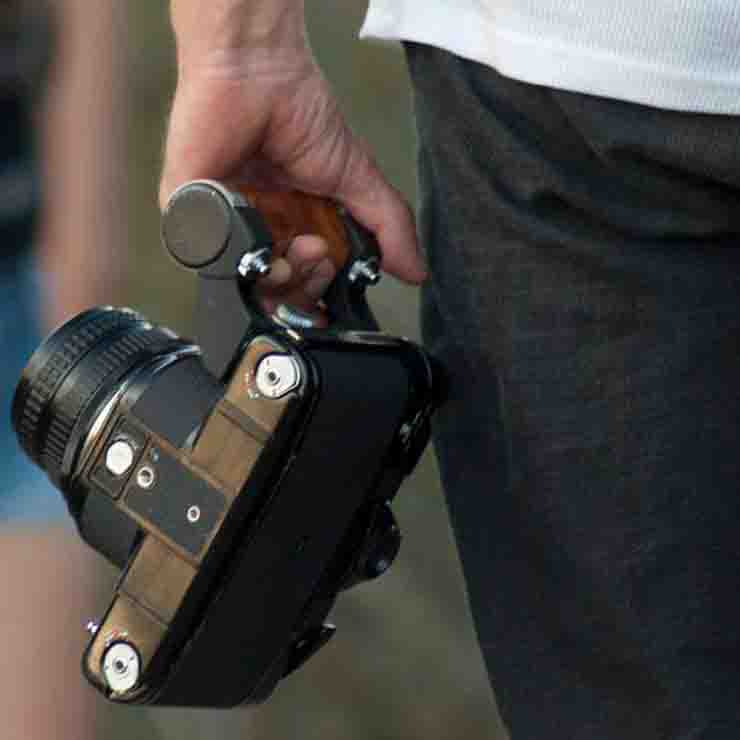
Collect Paris Photography
Expert guidance from 20+ years in the fine art photography market. Works featured at Paris Photo.
Photography-Collectors.comParis Photography 2026 at a Glance
- Photography born in Paris: 7 January 1839
- Société française de photographie: Est. 1854, world's oldest
- Magnum Photos founded: Paris, 1947
- Fondation HCB archive: Complete Cartier-Bresson works
- Galerie Roger-Viollet: 200,000+ images
- Paris Musées Collections: 1M+ artworks (free online)
- Paris Photo 2024: 225+ exhibitors, 65,000+ visitors
- Print market growth: +34% at Christie's & Sotheby's (2020–2025)
Key Paris Institutions
- Fondation HCB: 79 Rue des Archives, 3rd arr.
- Jeu de Paume: 1 Place de la Concorde, 1st arr.
- MEP: 5 Rue de Fourcy, 4th arr.
- Galerie Roger-Viollet: 6 Rue de Seine, 6th arr.
- BnF: Quai François-Mauriac, 13th arr.
- Paris Photo; Grand Palais (November annually)
Upcoming Events 2026
- September 2026: NY Art Book Fair, MoMA PS1, New York
- October 2026: LA Art Book Fair, Los Angeles
- November 2026: Paris Photo & Polycopies Book Fair, Grand Palais, Paris
- Year-round, Fondation HCB: six rotating exhibitions (henricartierbresson.org)
Paris Photography Newsletter
Weekly market updates, institution news, and expert collecting insights. Join 12,000+ collectors.
Subscribe Free